Album cover


Picture On Wood

Album cover

I agree with the INFJ-T result because it reflects how deeply I tend to think about my inner world and the meaning behind the things. I usually find myself checking the situation for motivation and emotions that go rather far from the surface. Being initiative
Low Shots


Light Painting


Mixed Media


Studio Portraits


Social and Political Issues

This is mainly to boost the morale of those victims to the promotion of social media, but others may disagree because they may think that we as the viewer choose what you watch, but I think that it isn’t the case especially when it can later become an addiction that consumes you. Though it could offend those who promote or make these videos, they should understand that it can cause a lot of problems to someone
Block Printing

Re-creation

The Boy with Uke is the one I chose to recreate
Scavenger Hunt


Surrealism
Cosmic Horror

NeuroSurrealism:
The Unveiling of Inner Cosmos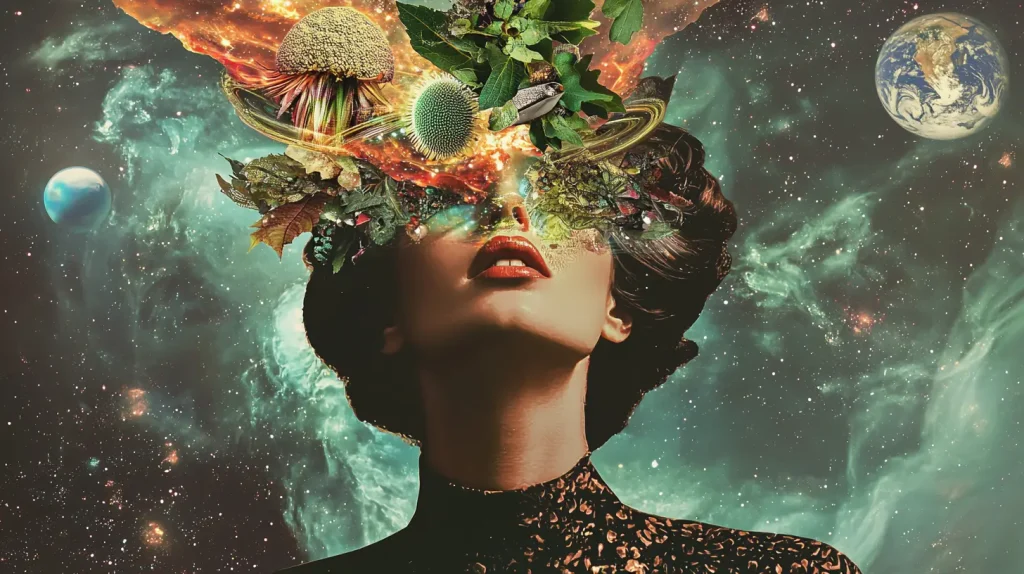
I chose this artwork because I was drawn to how unraveling it felt and how it left me with a strong sense of confusion, centered around a single question: what is going on? I like that it makes me curious, mainly because it forces you to think deeply. Even though the title already reveals a lot, what truly inspired me was the meaning behind the piece, as the image shows a person who seems to be endlessly uncovering every possible truth in the universe. To me, there are many horror elements in that idea because such knowledge could potentially shatter our very concept of reality. Overall, this concept art is beautifully crafted, and because of it I was able to find a cosmic like version of my own which touches the horror aspect a bit more, I hope but of course its Surrealism.
________________________________________________________________


Reflection
What I learned from the Simulator was how to balance the different camera modes but also learn to understand them better with every prior test. I also adjust the modes to different variations so, that I could test the different functionality’s that goes along with it and improve my understanding because I get quit lost sometimes. Another thing is that I found it to be very fun because you can just redo it as much as you want to fix your mistake it also showed me how to balance it overall but that there are also a few different tweaks you can possibly make so that there isn’t only one way to fix it or make it better.
- What are aperture, shutter speed and ISO?
- When would you need to change your ISO?
- What is aperture and shutter priority settings?
- What are AF modes how do you change them?
- Why do your need to meter the light to get the right exposure?
- What is the difference between a normal, wide angle and telephoto lens?
- What is white balance and why would you need to change it?
- What is depth of field and what is the difference between shallow and good?
- What are drive modes and metering modes?
- What is exposure compensation?
Answers
-
1 Aperture, Shutter Speed, ISO:
-
Aperture: Controls light and depth of field (how much is in focus).
-
Shutter Speed: Controls motion blur (fast freezes motion, slow blurs it).
-
ISO: Controls sensitivity to light; higher ISO works in low light but adds noise.
-
-
2 When to change ISO?
Increase ISO in low light, but higher ISO can cause noise. -
3 Aperture & Shutter Priority:
-
Aperture Priority: You set aperture, camera adjusts shutter.
-
Shutter Priority: You set shutter, camera adjusts aperture.
-
-
4 AF Modes:
-
Single-point AF: Focuses on one point.
-
Continuous AF: Focuses on moving subjects.
-
Change in camera settings or button depending on model.
-
-
5 Metering:
Determines correct exposure by measuring light, preventing under/overexposure. -
6 Lens Types:
-
Normal: ~50mm, mimics human view.
-
Wide-angle: <35mm, for landscapes.
-
Telephoto: >100mm, for distant subjects.
-
-
7 White Balance:
Adjusts color tones to make whites appear true white under different lights. -
8 Depth of Field:
-
Shallow: Only part of the image is sharp.
-
Deep: Most of the image is sharp.
-
-
9 Drive & Metering Modes:
-
Drive Modes: Control how many shots you take per press (single, burst, etc.).
-
Metering Modes: Control how light is measured for exposure (matrix, center-weighted, spot).
-
-
10 Exposure Compensation:
Adjusts exposure (makes images lighter or darker) to correct automatic settings.